Getting started
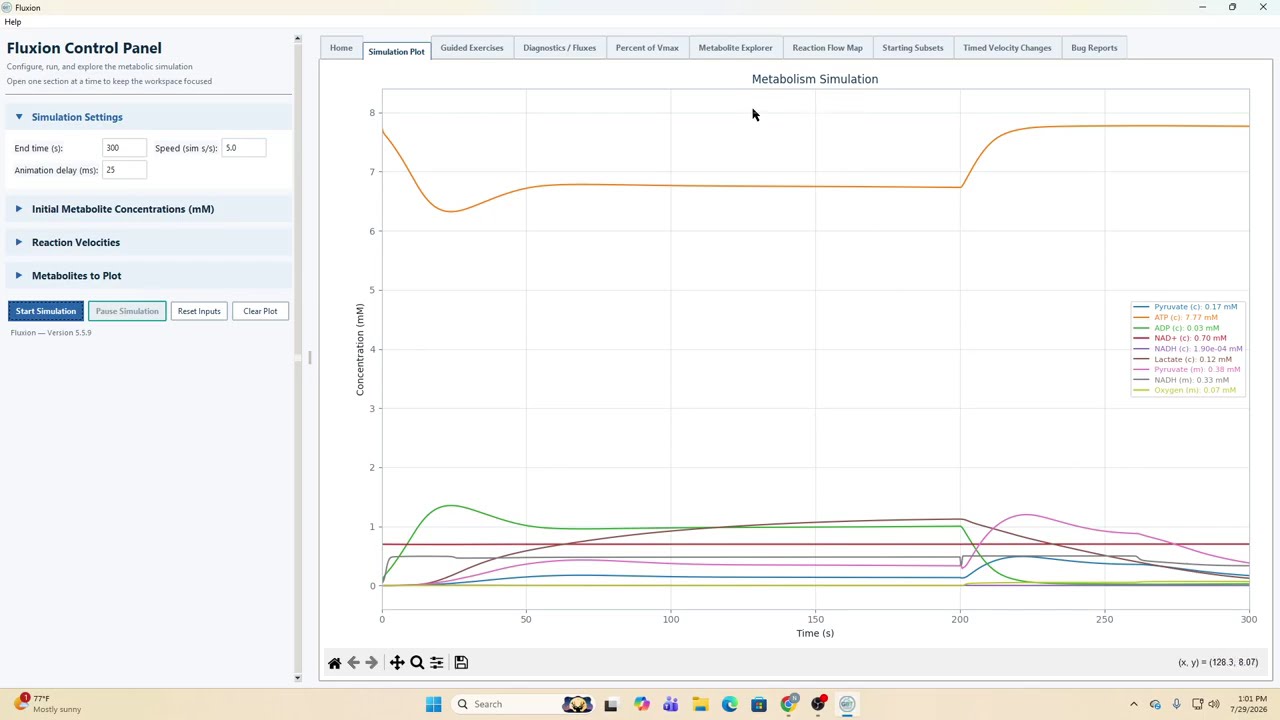
Your first simulation
Learn the interface, simulation controls, and the first steps for exploring metabolic behavior.
Watch tutorialDemonstrations & Tutorials
Start with the software, then connect what you see in Fluxion to focused lessons on glycolysis, redox defense, lactate metabolism, and oxidative phosphorylation.
Featured tutorial
Learn the basic interface, simulation controls, and how to begin exploring metabolic behavior in Fluxion.
This orientation uses an earlier Fluxion interface. The core simulation workflow remains useful; a current-version walkthrough is in production.
Published video library
Eight published lessons connect Fluxion's controls and simulated behavior with the underlying metabolic mechanisms. Use the interactive Learn atlas to find them by pathway or molecule.
Getting started
Learn the interface, simulation controls, and the first steps for exploring metabolic behavior.
Watch tutorial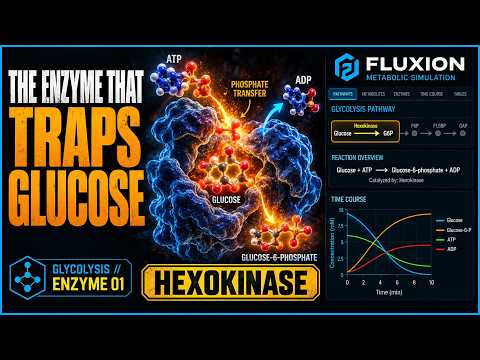
Glycolysis · Step 1
See why the cell spends ATP to trap glucose as glucose-6-phosphate.
Watch lesson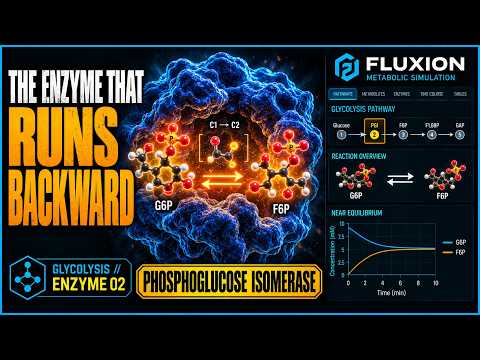
Glycolysis · Step 2
Follow the reversible rearrangement of glucose-6-phosphate into fructose-6-phosphate.
Watch lesson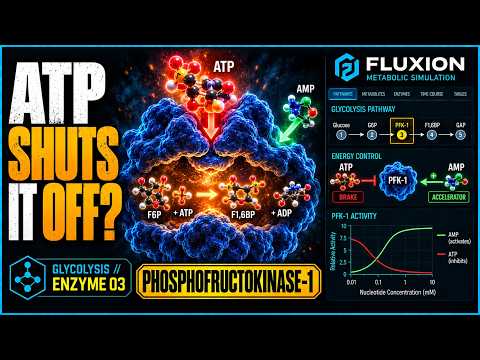
Glycolysis · Step 3
Understand glycolysis's committed step and how energy charge controls pathway flux.
Watch lesson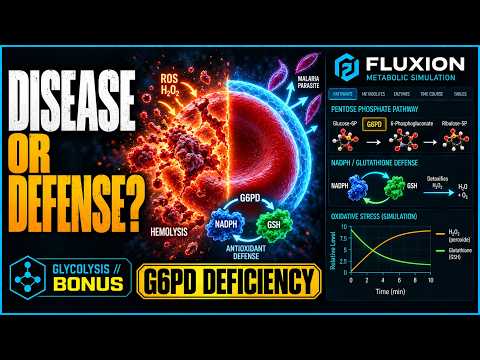
Pentose phosphate pathway
Connect NADPH and glutathione defense with favism, hemolysis, and red-cell physiology.
Watch lesson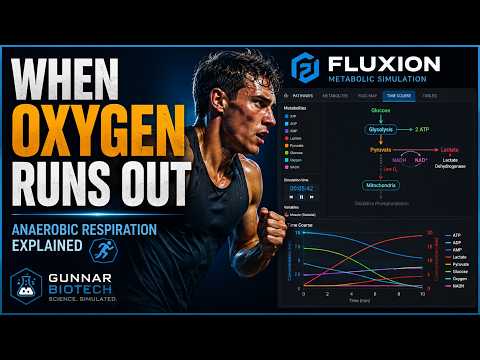
Lactate metabolism
See why lactate formation recycles NAD+ and keeps glycolysis running when oxygen falls.
Watch lesson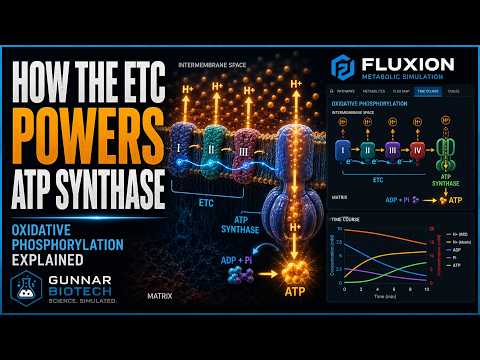
Oxidative phosphorylation
Trace electron flow, proton pumping, membrane potential, and ATP production.
Watch lesson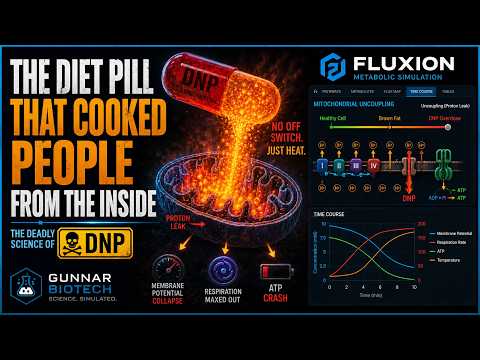
Mitochondrial uncoupling
Use DNP to reveal where energy goes when protons bypass ATP synthase.
Watch lessonIn production
These planned videos will provide deeper, task-specific guidance for the current Fluxion interface.
Getting started
Download, install, activate, and open the current Windows release.
Exploration tools
Inspect metabolites, enzymes, reactions, tissues, and related pathways.
Data interpretation
Read concentration graphs and connect conditions with metabolic trends.
Learning activities
Work through structured activities and predefined biological scenarios.
Advanced controls
Adjust the simulation and compare user-defined metabolic conditions.